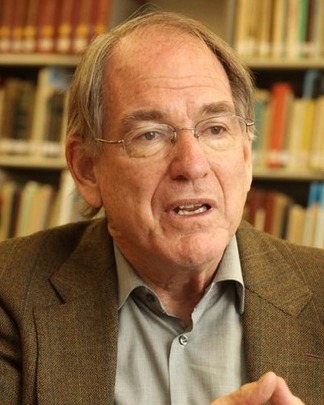
Sam Bowles
Sam Bowles is the Arthur Spiegel Research Professor and Director of the Behavioral Sciences Program at the Santa Fe Institute, where he is a leading voice in interdisciplinary research at the intersection of economics, psychology, and evolutionary science. Throughout his career, Bowles has challenged traditional economic theories that assume free markets and inequality necessarily maximize efficiency, arguing instead that narrowly self-interested financial incentives can generate outcomes that are both economically inefficient and socially corrosive. His research focuses on behavioral economics, political economy, and the cultural and genetic evolution of social preferences, offering a powerful critique of the conventional “economic man” model driven solely by self-interest. Bowles’s influential work demonstrates how cooperation, fairness, and moral norms evolve alongside economic institutions, reshaping how economists understand human motivation and collective behavior. He has authored numerous widely cited books and academic papers examining how markets, incentives, and institutions shape social outcomes. Prior to joining the Santa Fe Institute, Bowles taught economics at Harvard University, the University of Massachusetts, and the University of Siena.
Sam Bowles Professional Experience / Academic History
Professional Experience
-
Arthur Spiegel Research Professor, Director of the Behavioral Sciences Program
-
Professor, Faculty of Economics
-
Director, Economics Program
-
Emeritus Professor of Economics
-
Associate Professor of Economics
Academic History
-
Ph.D., Economics
-
B.A., Economic and Political Institutions
RESEARCH EXPERTISE & THOUGHT LEADERSHIP
Sam Bowles is a leading interdisciplinary scholar whose research integrates insights from economics, archaeology, anthropology, biology, psychology, and political science to better understand human behavior and social cooperation.
His work challenges traditional economic models by demonstrating that altruism, ethical motivations, and social norms are widespread and play a central role in effective governance and institutional design.
In recent research, Bowles has explored how organizations, communities, and nations can be governed more successfully by recognizing moral incentives alongside material ones.
He is a founding contributor to the CORE Project (Curriculum Open-access Resources in Economics), an international initiative to modernize undergraduate economics education by incorporating topics such as inequality, environmental sustainability, and behavioral economics.
Beyond academia, Bowles has advised governments and institutions worldwide, including those of Cuba, South Africa, and Greece, as well as South African President Nelson Mandela, U.S. Senator Robert F. Kennedy, Dr. Martin Luther King Jr., the New Mexico State Legislature, the Congress of South African Trade Unions, and the Pontifical Academy of Sciences in Rome.
He has also delivered intensive economics courses to environmentalists, trade unionists, and social justice advocates across the United States, Canada, and South Africa, reinforcing his commitment to public-facing scholarship.
ACADEMIC IMPACT
Sam Bowles’s research and publications have had a profound and lasting impact across economics, sociology, political science, evolutionary biology, and public policy.
His work is widely cited for challenging orthodox economic assumptions centered on pure self-interest, emphasizing instead the role of moral norms, social preferences, institutions, and cooperation in shaping economic outcomes.
Bowles’s interdisciplinary approach has influenced academic curricula, policy debates, and institutional design worldwide, helping to redefine how scholars and practitioners understand inequality, governance, incentives, and human behavior in economic systems.
PUBLICATIONS
Bowles has published extensively across some of the world’s most prestigious academic and interdisciplinary journals, including Science, Nature, American Economic Review, Econometrica, Journal of Political Economy, Quarterly Journal of Economics, Behavioral and Brain Sciences, Current Anthropology, Harvard Business Review, Philosophy and Public Affairs, Journal of Public Economics, Theoretical Population Biology, Games and Economic Behavior, Antiquity, and New Scientist.
In addition to his scholarly articles, Bowles is the author and co-author of several highly influential books that have shaped modern thinking in behavioral economics, political economy, and evolutionary social science.
His major works include The Moral Economy: Why Good Incentives Are No Substitute for Good Citizens (2016), A Cooperative Species: Human Reciprocity and Its Evolution (2011, with Herbert Gintis), Microeconomics: Behavior, Institutions, and Evolution (2004), The New Economics of Inequality and Redistribution (2012), and Schooling in Capitalist America (1976, with Herbert Gintis).